
Image Search
Search Mark Kelley's online photo library
Sort by Category
- All
- Admiralty Island
- Adventure
- Africa
- Alaska
- Alaska in fall
- Alaskans
- Alpenglow
- Anan Creek
- Arctic
- Arctic National Wildlife Refuge
- Aurora Borealis
- Award Winners
- Baby Animals
- Bald Eagles
- Beach
- Bears
- Birds
- Boats
- Brooks Range Alaska
- Caribou
- Coastal Range
- Commercial Fishing
- Commercial Photography
- Communities
- Cruising Alaska
- Denali
- Denali National Park
- Downtown Juneau
- Eaglecrest Ski Area
- Editorial
- Fall
- Ferries
- Fishing
- Flowers
- Fog
- Forest
- Galapagos
- Gastineau Channel
- Glacier Bay National Park
- Glacier Bears
- Glaciers
- Golf
- Gustavus
- Haines
- Harbor Seals
- Harbors
- Hiking
- Humpback Whales
- Icebergs
- Icy Strait
- Inside Passage
- Juneau
- Juneau Icefield
- Kayaking
- Ketchikan
- Lakes, Rivers, and streams
- Lighthouses
- Lodges
- Lynn Canal
- Mendenhall Glacier
- Mendenhall Towers
- Misty Fiords National Monument
- Moon
- Moose
- Morning
- Mountains
- Native Alaskan
- Nikon
- Northern Lights
- Note Cards
- Orcas
- Pack Creek
- Parent and Child
- People
- Petersburg
- Planes
- Postcards
- Pribilofs
- Prince of Wales Island
- Publications
- Rafting
- Rainbows
- Scenics
- Sea
- Sea Otters
- Sitka
- Skagway
- Skiing
- snow
- Snow Sports
- Southeast Alaska
- Subsistence
- Sunrise
- Sunsets
- Totem Poles
- Tracy Arm
- Whales
- Wildflowers
- Wildlife
- Winter
- Wrangell
- Youth
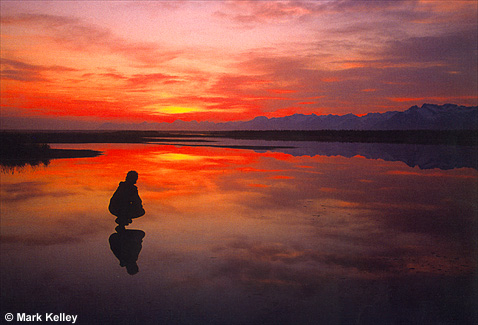
It looks like my friend, Brien, is floating on the water. Actually he is standing on a very shallow tidal flat with the tide coming in. The water was only an inch or so deep and was this deep for hundreds of feet around him. This photo illustrates the month of March in my 2007 Southeast Alaska calendar. Camera: Nikon F/5, Lens: 20-35mm f/2.8 Nikkor, Film 35mm Velvia slide film.-Mark Kelley
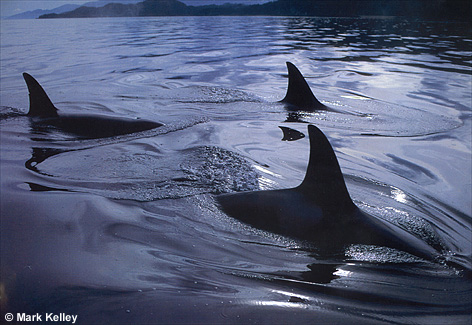
This is the last whale photo in the series promoting my whale show at the Alaska State Museum in Juneau. Killer whales surface in the inky looking dark water of Lynn Canal. The black looking water results from shooting this photo on a very overcast day just before sunset in failing light. This photo illustrates the month of October in my 2007 Southeast Alaska calendar. Camera: Nikon F/5, Lens: 20-35mm f/2.8 Nikkor, Film 35mm Velvia slide film-Mark Kelley
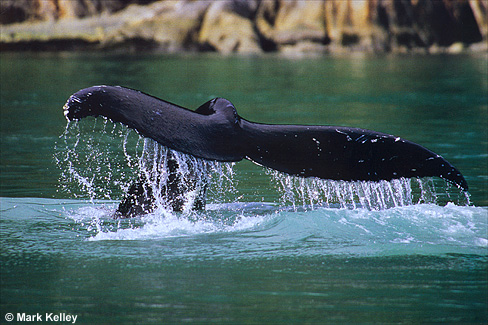
I am running a lot of whale photos for a couple of weeks to remind people of the show on whales at the Alaska State Museum in Juneau featuring my photos. A humpback whale tail is referred to as flukes and can be as long as 15 feet from tip to tip. That means if I was to lie down on a whale tail (I stand 6 4) and another person my same height laid down, we still would have three feet or so between us. These are huge animals growing to lengths between 40 to 50 feet as adults. This photo ...
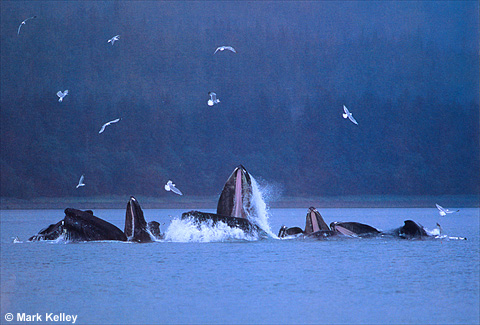
Humpback whales only eat little fish and grill and have to eat them whole because they have no teeth. Sometimes whale cooperatively feed. A group of humpbacks sometimes swim upwards circling a school of herring while blowing bubbles out of their blow holes as they circle upwards. This action creates a bubble net around the school of fish keeping the prey concentrated. When the whales have trapped the herring at the surface, they come up through the school with the mouths open gulping ...
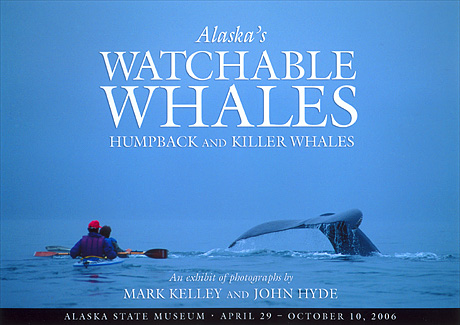
This photo of kayakers next to a humpback whale tail is the image I am using to open my show on whales with John Hyde, a local wildlife photographer, at the Alaska State Museum in Juneau. The show opened on Saturday, April 29 and will run through October 14th. The show features 11 photos of mine with two of them printed on canvas measuring five feet by forty inches. The show in the Governors Gallery also features three full scale whales painted on the walls with a free standing humpback ...
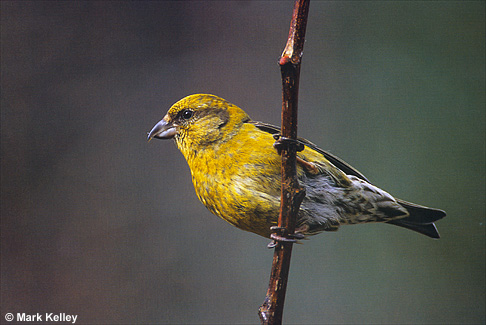
April and May are great months for migrating birds in the Juneau area. I shot this photo last April while visiting a friend at his home in the valley. He had a feeder and the crossbills were collecting in his yard by the hundreds. I spent several hours with the 500mm lens with the 1.5 extender (effectively 750mm lens) shooting away. It was a lot of fun. This photo illustrates the month of April in my 2007 Juneau Alaska calendar. Camera: Nikon F/5, Lens: Nikkor 500mm with 1.5 extender, ...
- 1
- 2
- 3
- 4
- 5
- 6
- 7
- 8
- 9
- 10
- 11
- 12
- 13
- 14
- 15
- 16
- 17
- 18
- 19
- 20
- 21
- 22
- 23
- 24
- 25
- 26
- 27
- 28
- 29
- 30
- 31
- 32
- 33
- 34
- 35
- 36
- 37
- 38
- 39
- 40
- 41
- 42
- 43
- 44
- 45
- 46
- 47
- 48
- 49
- 50
- 51
- 52
- 53
- 54
- 55
- 56
- 57
- 58
- 59
- 60
- 61
- 62
- 63
- 64
- 65
- 66
- 67
- 68
- 69
- 70
- 71
- 72
- 73
- 74
- 75
- 76
- 77
- 78
- 79
- 80
- 81
- 82
- 83
- 84
- 85
- 86
- 87
- 88
- 89
- 90
- 91
- 92
- 93
- 94
- 95
- 96
- 97
- 98
- 99
- 100
- 101
- 102
- 103
- 104
- 105
- 106
- 107
- 108
- 109
- 110
- 111
- 112
- 113
- 114
- 115
- 116
- 117
- 118
- 119
- 120
- 121
- 122
- 123
- 124
- 125
- 126
- 127
- 128
- 129
- 130
- 131
- 132
- 133
- 134
- 135
- 136
- 137
- 138
- 139
- 140
- 141
- 142
- 143
- 144
- 145
- 146
- 147
- 148
- 149
- 150
- 151
- 152
- 153
- 154
- 155
- 156
- 157
- 158
- 159
- 160
- 161
- 162
- 163
- 164
- 165
- 166
- 167
- 168
- 169
- 170
- 171
- 172
- 173
- 174
- 175
- 176
- 177
- 178
- 179
- 180
- 181
- 182
- 183
- 184
- 185
- 186
- 187
- 188
- 189
- 190
- 191
- 192
- 193
- 194
- 195
- 196
- 197
- 198
No results found.